
| Round / pick | Player | Grade |
|---|---|---|
| R1 · No. 14 | Broderick Jones (OT) | D |
| Trade: Pittsburgh sent picks No. 17 and No. 120 to New England to move up. | ||
| R2 · No. 32 | Joey Porter Jr. (CB) | A |
| Trade: Pick acquired from Chicago in the Chase Claypool trade. | ||
| R2 · No. 49 | Keeanu Benton (DL) | A- |
| R3 · No. 93 | Darnell Washington (TE) | A- |
| Trade: Pittsburgh traded down with Carolina from No. 80 and added No. 132. | ||
| R4 · No. 132 | Nick Herbig (EDGE) | A+ |
| Trade: Pick added in the Carolina trade-down. | ||
| R7 · No. 241 | Cory Trice Jr. (CB) | D |
| Trade: Pick originated with Minnesota and arrived through Denver. | ||
| R7 · No. 251 | Spencer Anderson (OL) | A- |
| Trade: Compensatory pick from the Rams. | ||
| Current class grade | A- | |
The grades reflect three NFL seasons, draft position, contract decisions, health and actual roster importance. Omar Khan’s first class is a useful reminder that a draft can survive a first-round miss when the middle rounds repeatedly deliver.
Broderick Jones is the costly miss
Pittsburgh moved from No. 17 to No. 14 by sending New England pick No. 120, then selected Jones as the athletic tackle around whom it hoped to rebuild. The move reflected the importance of the position and Pittsburgh’s confidence in Jones as a high-upside prospect.
Three years later, the grade is a D. Uneven play, position movement and serious neck concerns have prevented Jones from becoming a dependable starter. The Steelers’ decision to draft Troy Fautanu in 2024 and Max Iheanachor in 2026 shows how little certainty the original move created.
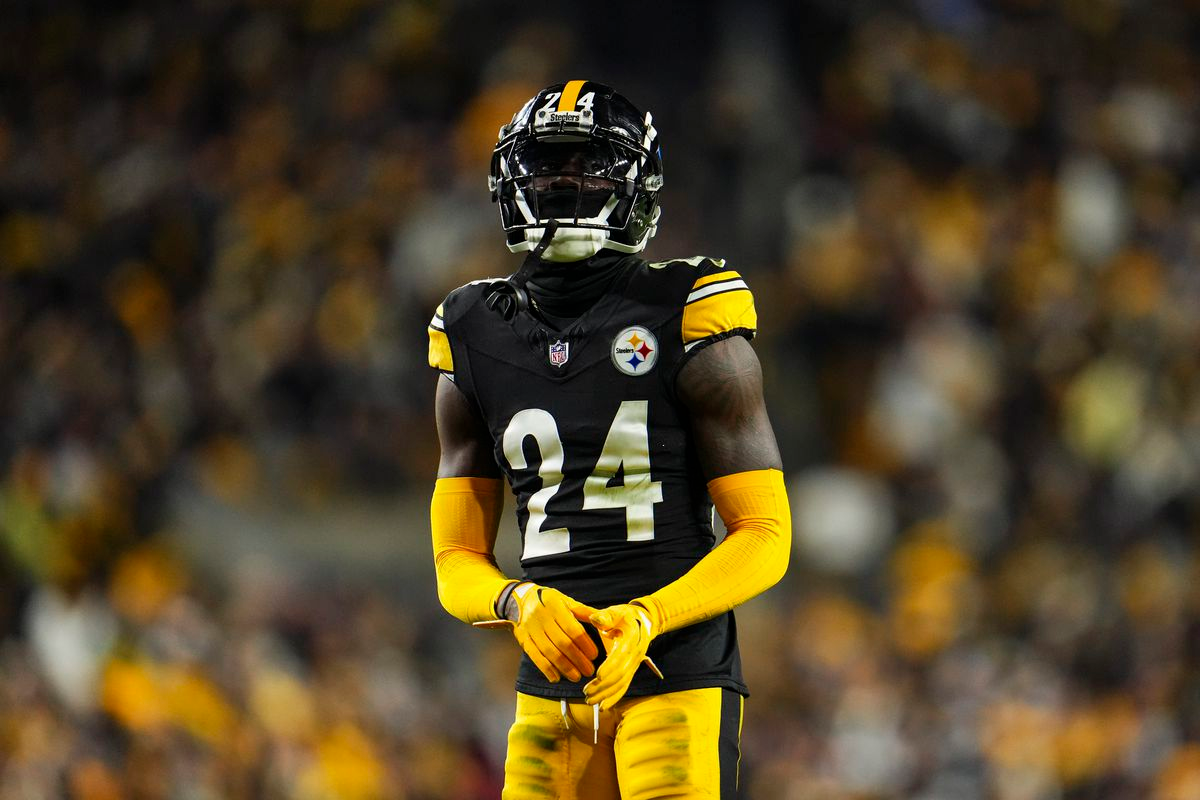
Joey Porter Jr. made the Chase Claypool trade a major win
Pick No. 32 came from Chicago in the Chase Claypool trade. Turning an expendable receiver into a starting outside corner was excellent asset management before Porter played a snap, and his matchup ability has validated the decision.
Porter’s length and confidence allow Pittsburgh to assign him difficult receivers, while his penalty control and ball production remain areas for refinement. The grade stays at A because the Steelers converted a trade asset into a premium-position starter at the top of Round 2.

Keeanu Benton became part of the defensive core
Benton was not the flashiest selection at No. 49, but his power and interior movement gave Pittsburgh a needed successor candidate behind Cam Heyward. He has started games in every season and remains central to the defensive line’s transition toward a younger core.

The current A- reflects a successful second-round pick who can still climb. Benton has not yet reached the consistency required for an elite grade, but Pittsburgh found a multi-year starter at a position where strength, technique and experience often take time.
The Carolina trade-down produced Washington and Herbig
Pittsburgh moved down from No. 80 to No. 93 in a deal with Carolina and added pick No. 132. Those selections became Darnell Washington and Nick Herbig, turning one third-round slot into two long-term contributors.
Washington developed into a dominant blocking presence with growing red-zone value and earned a four-year extension. Herbig became the bigger steal, producing impact pressure behind T.J. Watt and Alex Highsmith before landing a major extension of his own. Their current grades of A- and A+ make the trade-down one of Khan’s best draft decisions.


Cory Trice and Spencer Anderson show both sides of Round 7
Trice looked like exceptional seventh-round value because his size and coverage traits were far better than his draft slot. Injuries continued to define his NFL path, however, and he never developed into a stable part of the secondary. The current D is about return, not talent.

Anderson is the opposite outcome. The compensatory selection from the Rams produced a versatile lineman capable of filling multiple positions and taking first-team guard reps. That is A- value at pick No. 251, where simply finding a player who remains useful after three seasons is a win.
Final 2023 class grade: A-
The current class grade is an A-. Jones prevents an A or A+ because Pittsburgh spent extra capital to secure him and still had to keep investing at tackle. Trice also provided no lasting return.
The rest of the class is unusually productive. Porter and Benton are core starters, Washington and Herbig earned extensions, and Anderson supplied seventh-round line depth. Khan’s first draft did not succeed because every selection worked. It succeeded because one trade return and one trade-down created enough premium value to overcome the miss at the top.
Compare Khan’s first class with the newer Steelers 2024 draft class review.
Evaluation is current as of June 19, 2026. Pick and trade information comes from the Steelers 2023 draft class, team transaction coverage and Pro Football Reference.