
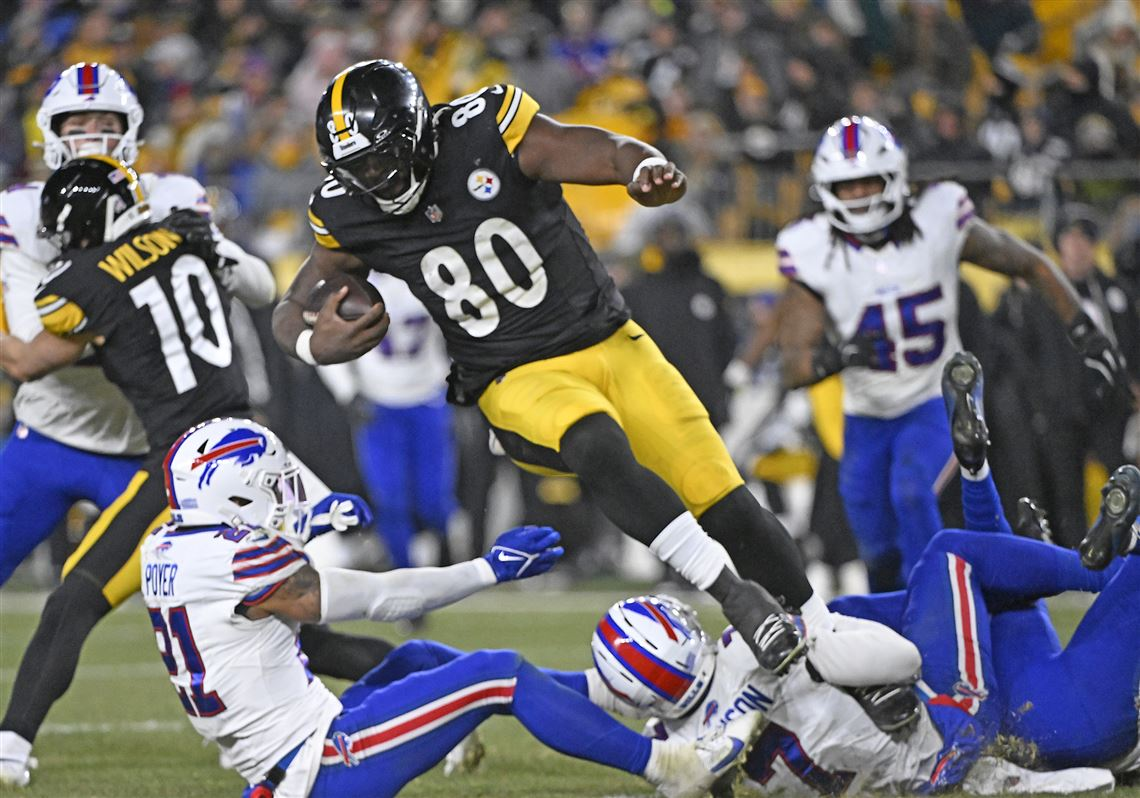
Pat Freiermuth and Darnell Washington are not the loudest Steelers offensive storyline, but they may quietly decide how complete Mike McCarthy’s offense can become in 2026.
The reason is simple. Tight ends connect the passing game, run game and protection plan. For an offense built around Aaron Rodgers, DK Metcalf and a young line, that connective tissue matters.
Freiermuth gives Rodgers a middle-field answer
Freiermuth’s value is reliability. He can work between zones, find space on third down and give Rodgers a target who does not need every route to be a vertical shot.
That kind of receiver is important when defenses tilt coverage toward Metcalf or force Rodgers to take underneath throws. Freiermuth can keep the offense on schedule if he becomes a steady chain mover.
Washington changes the run-game picture
Washington’s size makes him one of Pittsburgh’s most interesting players. When he blocks well, the Steelers can create heavier formations without becoming completely predictable.
The next step is making defenses respect him as more than a blocker. Even a modest receiving role can punish linebackers who overcommit to the run and give Rodgers easy throws near the goal line.
Two-tight-end looks can help the line
A young offensive line benefits from formation help. Tight ends can chip, widen defensive fronts and create angles in the run game. That does not mean hiding the tackles every snap. It means giving the offense tools to handle difficult matchups.
McCarthy can use Freiermuth and Washington together to make the Steelers less obvious. The same personnel group can run power, play action, quick game or shot plays depending on defensive response.
Robert Tonyan adds system familiarity
Tonyan may not be the long-term centerpiece, but his familiarity with McCarthy’s offense can help the room. Veteran tight ends who understand landmarks, adjustments and quarterback timing can be useful during installation.
That is especially true with Rodgers. Trust matters at tight end because many throws happen in traffic where body position and timing decide whether the play is safe.
The tight ends can raise the floor
Metcalf supplies the ceiling. The tight ends can raise the weekly floor. If Freiermuth wins underneath and Washington improves as a dual-threat piece, Pittsburgh can avoid becoming too dependent on low-percentage throws.
That balance is what the Steelers need. A Rodgers-led offense does not have to abandon physical football. It has to make physical football efficient enough to support the passing game instead of limiting it.
The larger point is that Pittsburgh’s 2026 roster cannot be evaluated through one headline or one familiar name. The Steelers are balancing a veteran quarterback window, a new coaching structure, young draft investments and several position battles that will not be settled until pads come on. That is why training camp, preseason usage and early regular-season roles will matter as much as the offseason depth chart.
For Steelers fans, the useful question is not whether the June version of the roster looks interesting. It is whether the most important pieces can translate that interest into repeatable Sunday answers: cleaner protection, better spacing, more defensive disruption and enough young development to keep the franchise from facing the same questions again next spring. That standard is simple, but it is demanding.
Roster context is current as of June 18, 2026. Follow more Steelers analysis in the Steelers Realm articles section.