
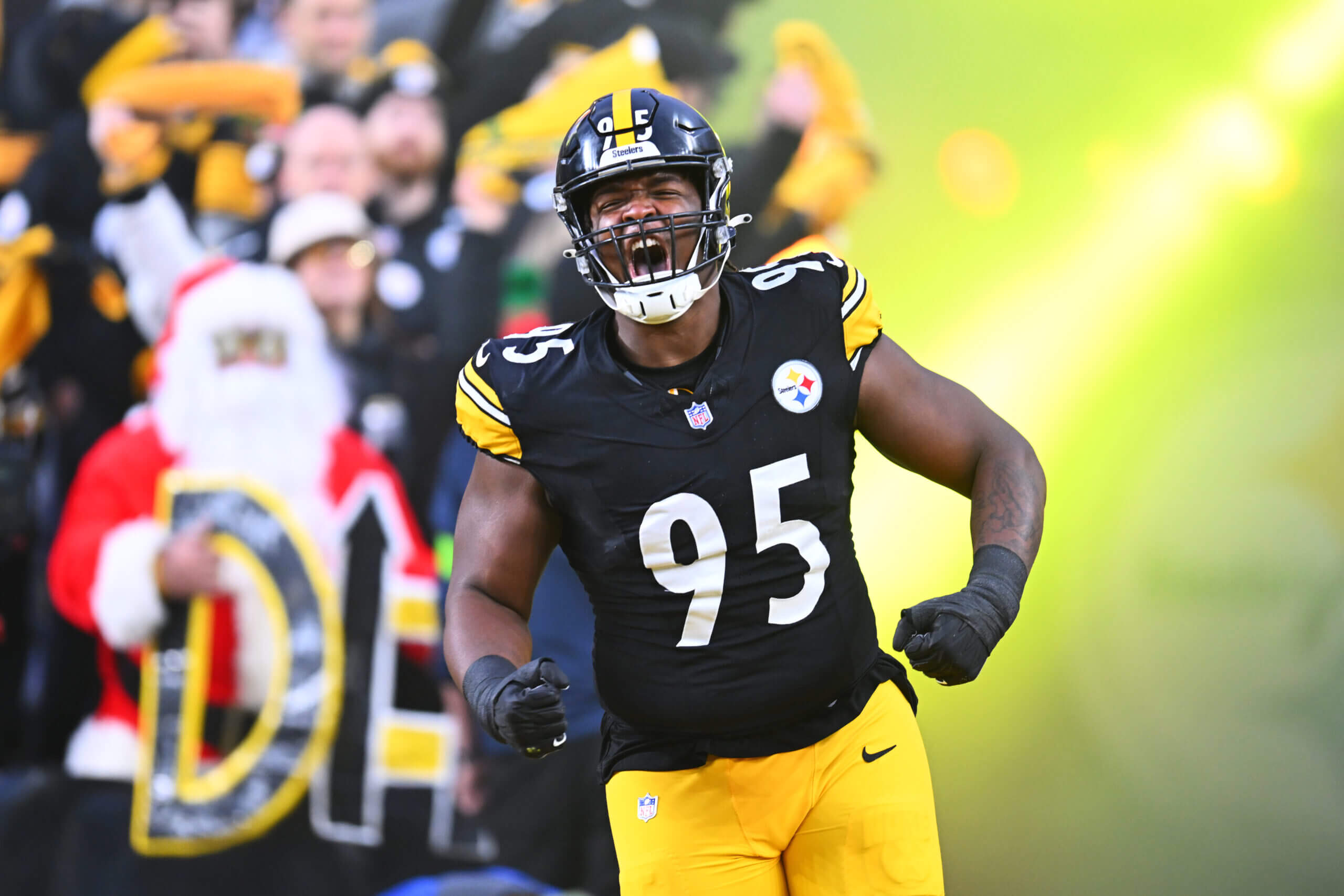
Cam Heyward is still the emotional and technical center of the Steelers’ defensive line. That does not change the bigger roster truth: Pittsburgh needs Keeanu Benton and Derrick Harmon to become the next version of its defensive front.
The Steelers have invested too much in the trenches for the future to depend only on veteran greatness. Benton and Harmon give the team a realistic path toward staying physical after Heyward’s role eventually changes.
Benton has to become more than promising
Benton has shown the traits Pittsburgh wanted: power, leverage and the ability to disrupt from the interior. The next step is consistency. Interior defenders become core players when they affect both the run game and passing downs every week.
For Benton, that means finishing more plays, commanding respect from double teams and making life easier for the linebackers behind him. The Steelers need him to be a foundation piece, not only a rotational bright spot.
Harmon brings first-round expectations
Derrick Harmon arrived with the investment level that changes expectations. First-round defensive linemen are drafted to become difference-makers, especially for a team that has long defined itself through defensive fronts.
Harmon’s rookie year gave Pittsburgh a starting point. His second season should reveal whether he can become a dependable impact player next to Benton and Heyward.
Heyward can help the transition
The benefit of having Heyward still playing at a high standard is that Benton and Harmon do not have to learn in a vacuum. They can see how a professional defensive lineman studies, practices and survives a long season.
That mentorship matters, but it cannot replace production. The younger linemen must eventually carry their own weight when opponents stop treating them like supporting pieces.
The run defense needs their growth
Pittsburgh’s defensive identity depends on not getting moved off the ball. If Benton and Harmon control gaps, the linebackers can play faster and the pass rush can attack from better situations.
If the interior leaks, everything becomes harder. Safeties get pulled into the box, edge rushers lose pass-rush chances and the defense spends too much time reacting.
This is the succession plan
The Steelers do not need to announce a post-Heyward era for it to be real. Every snap Benton and Harmon play together is part of that transition.
If both young linemen take another step in 2026, Pittsburgh can stay true to its defensive identity while getting younger. That is the kind of roster development that keeps a team competitive beyond one veteran window.
The larger point is that Pittsburgh’s 2026 roster cannot be evaluated through one headline or one familiar name. The Steelers are balancing a veteran quarterback window, a new coaching structure, young draft investments and several position battles that will not be settled until pads come on. That is why training camp, preseason usage and early regular-season roles will matter as much as the offseason depth chart.
For Steelers fans, the useful question is not whether the June version of the roster looks interesting. It is whether the most important pieces can translate that interest into repeatable Sunday answers: cleaner protection, better spacing, more defensive disruption and enough young development to keep the franchise from facing the same questions again next spring. That standard is simple, but it is demanding.
Roster context is current as of June 18, 2026. Follow more Steelers analysis in the Steelers Realm articles section.