
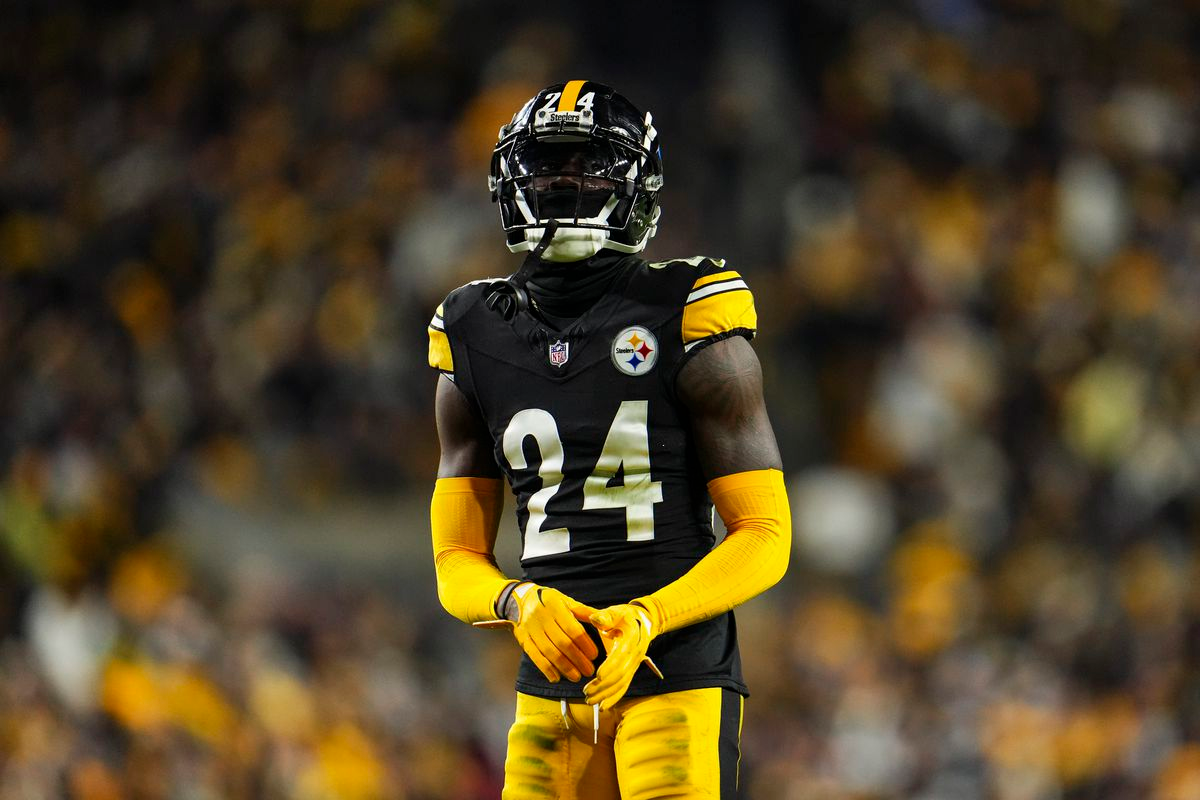
The Steelers’ secondary has enough name value to get attention, but names do not cover receivers by themselves. Joey Porter Jr., Jalen Ramsey, Jamel Dean and Asante Samuel Jr. give Pittsburgh options. The challenge is turning those options into defined roles.
That makes the cornerback room one of the most fascinating parts of the 2026 roster. The upside is obvious. So is the need for a clear plan.
Porter remains the long-term outside piece
Joey Porter Jr. still represents the future of the position in Pittsburgh. His length, competitiveness and ability to challenge bigger receivers make him a natural outside corner in a division that demands physical coverage.
The next step is refinement. Penalty control, route recognition and finishing plays on the ball can turn a talented corner into a true weekly eraser.
Ramsey changes the matchup menu
Jalen Ramsey’s value is his flexibility. He can play outside, move inside, match certain tight ends and give defensive coordinators a way to solve specific weekly problems.
The Steelers should not waste that flexibility by locking him into one static role if the matchup calls for something else. Ramsey is most valuable when the defense can use his intelligence and physicality as a movable answer.
Dean and Samuel create depth questions in a good way
Jamel Dean gives Pittsburgh size and outside experience. Asante Samuel Jr. offers different movement skills and ball production. Together, they make the secondary deeper than it has been in recent seasons.
Depth only helps if roles are honest. The Steelers need to decide who handles the slot, who travels, who plays boundary snaps and how the safety rotation supports those choices.
Coverage stats need context
Next Gen Stats-style coverage numbers can help explain separation allowed, target rate and completion probability, but cornerback stats always need context. Pass rush, safety help and assignment difficulty matter.
That is why Pittsburgh’s evaluation should focus on whether the secondary works as a unit. A corner can look ordinary on paper while executing a difficult role that lets the rest of the defense function.
The secondary can unlock pressure
If the Steelers cover better early in downs, T.J. Watt, Alex Highsmith and Nick Herbig get more time to affect quarterbacks. If the coverage busts, even elite pass rushers lose chances.
Porter and Ramsey give Pittsburgh the pieces for a more flexible defense. The question is whether Patrick Graham can turn those pieces into a coverage plan that is more than a collection of recognizable names.
The larger point is that Pittsburgh’s 2026 roster cannot be evaluated through one headline or one familiar name. The Steelers are balancing a veteran quarterback window, a new coaching structure, young draft investments and several position battles that will not be settled until pads come on. That is why training camp, preseason usage and early regular-season roles will matter as much as the offseason depth chart.
For Steelers fans, the useful question is not whether the June version of the roster looks interesting. It is whether the most important pieces can translate that interest into repeatable Sunday answers: cleaner protection, better spacing, more defensive disruption and enough young development to keep the franchise from facing the same questions again next spring. That standard is simple, but it is demanding.
Roster context is current as of June 18, 2026. Follow more Steelers analysis in the Steelers Realm articles section.