
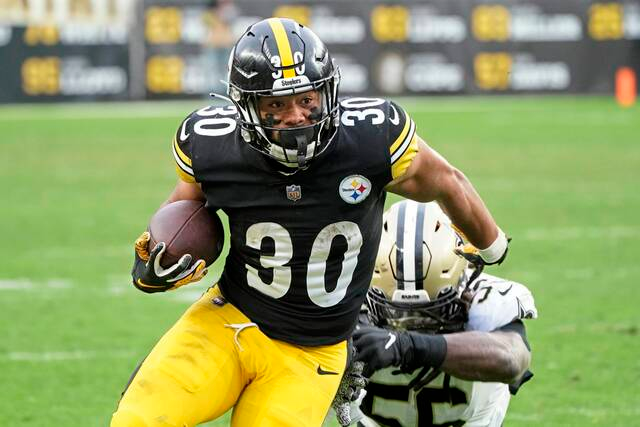
The Steelers’ 2026 backfield may not be built around one superstar, and that might be fine. Jaylen Warren and Rico Dowdle give Pittsburgh a chance to build a running back rotation around trust, versatility and staying on schedule.
That matters with Aaron Rodgers. The backfield’s job is not only to produce rushing highlights. It is to protect, catch, handle assignments and prevent the offense from becoming one-dimensional.
Warren remains the tone-setter
Warren’s running style gives the Steelers energy. He runs through contact, contributes as a receiver and has earned trust because his game does not depend on perfect blocking to create value.
The question is workload. Warren can lead the group, but Pittsburgh must be careful not to turn his physical style into unnecessary wear. A strong rotation can keep him explosive deeper into the season.
Dowdle gives the offense a practical partner
Dowdle’s value is steadiness. He can handle early-down work, catch enough passes to avoid tipping plays and provide the kind of professional reliability coaches want from a veteran back.
That may not create fantasy-football excitement, but it helps an NFL offense. Rodgers needs backs who are where they are supposed to be, especially in protection and checkdown situations.
Kaleb Johnson is still the swing piece
Johnson’s second season could change the entire backfield conversation. If he shows better decisiveness and special-teams value, Pittsburgh suddenly has a bigger, younger runner who can push for meaningful carries.
If he does not, the Steelers may lean more heavily on Warren and Dowdle while using Travis Homer and others for specific roles. Johnson does not need to become the starter immediately, but he does need to force the staff to notice him.
The offensive line decides the ceiling
Running back debates can ignore the obvious: backs need lanes. If Pittsburgh’s young offensive line improves, Warren and Dowdle can keep the offense balanced. If the line struggles, the backs will spend too many plays creating something from nothing.
Next Gen Stats-style rushing context can help separate back performance from blocking. Efficiency, rushing yards over expected and success rate matter more than simply counting carries.
Trust can be enough for this offense
The Steelers do not need their running backs to carry the entire team. They need them to make the offense easier for Rodgers, protect leads and punish light boxes created by Metcalf’s presence outside.
If Warren and Dowdle do that, Pittsburgh’s backfield will be more useful than flashy. In a final-season window for Rodgers, useful may be exactly what the Steelers need.
The larger point is that Pittsburgh’s 2026 roster cannot be evaluated through one headline or one familiar name. The Steelers are balancing a veteran quarterback window, a new coaching structure, young draft investments and several position battles that will not be settled until pads come on. That is why training camp, preseason usage and early regular-season roles will matter as much as the offseason depth chart.
For Steelers fans, the useful question is not whether the June version of the roster looks interesting. It is whether the most important pieces can translate that interest into repeatable Sunday answers: cleaner protection, better spacing, more defensive disruption and enough young development to keep the franchise from facing the same questions again next spring. That standard is simple, but it is demanding.
Roster context is current as of June 18, 2026. Follow more Steelers analysis in the Steelers Realm articles section.