
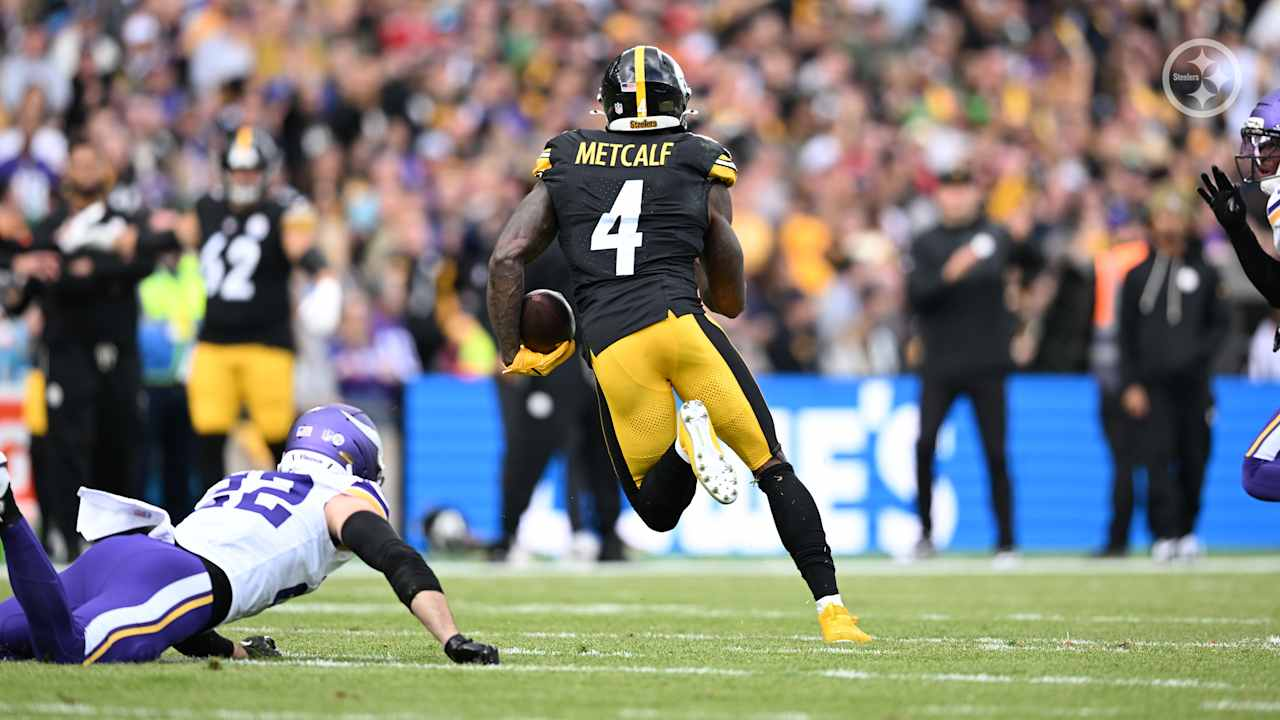
The Steelers did not need DK Metcalf simply because he is famous. They needed him because Aaron Rodgers’ final-season offense required a receiver who changes defensive spacing before the ball is even snapped.
Metcalf gives Pittsburgh that. His size, speed and vertical reputation force cornerbacks and safeties to respect the boundary. Even when he is not catching the ball, he can create cleaner answers for the rest of the offense.
Metcalf changes the geometry of the field
The Steelers have spent too many seasons trying to manufacture explosive plays without enough natural stress on defenses. Metcalf solves part of that problem because defenses must account for the deep ball, back-shoulder throws and red-zone matchups.
That matters for Rodgers. A veteran quarterback who can manipulate safeties becomes more dangerous when one receiver can punish single coverage outside. Metcalf does not need 12 targets every week to affect coverage rules.
The value goes beyond raw receiving totals
Receiver evaluation can get too box-score heavy. Metcalf’s catches, yards and touchdowns matter, but so do defensive cushions, safety rotations and the way his presence opens intermediate windows for Pat Freiermuth, Michael Pittman Jr. and the slot receivers.
Next Gen Stats-style context is useful here because separation, route depth and yards after catch help explain how a receiver wins. Metcalf’s profile has always been built on rare physical stress, and Pittsburgh needs that stress to create easier throws.
Rodgers can maximize the details
Metcalf’s best fit with Rodgers may come on timing throws that look simple but punish leverage. If a corner plays soft, Rodgers can take the easy completion. If the corner squats, Metcalf can win vertically. If the safety cheats, the quarterback can move elsewhere.
That is the point of adding a true No. 1 target. The offense becomes less dependent on perfect play-calling because the matchup itself creates options.
The Steelers still need balance
Metcalf cannot fix the offense alone. Pittsburgh still needs the line to protect, the running backs to keep defenses honest and the secondary receivers to punish attention tilted toward Metcalf.
If the rest of the offense stalls, defenses will bracket Metcalf and dare someone else to win. That is why Michael Pittman Jr., Roman Wilson and Germie Bernard remain important pieces of the bigger puzzle.
The move fits the urgency of 2026
A young rebuilding team might hesitate to build around a veteran receiver and a veteran quarterback at the same time. The Steelers are not operating in a slow rebuild. Rodgers’ timeline demands useful answers now.
Metcalf gives Pittsburgh a credible offensive identity: protect Rodgers, threaten the boundary, create space inside and make defenses defend every blade of grass. For a team trying to turn regular-season competence into playoff danger, that is exactly the kind of weapon it had to find.
The larger point is that Pittsburgh’s 2026 roster cannot be evaluated through one headline or one familiar name. The Steelers are balancing a veteran quarterback window, a new coaching structure, young draft investments and several position battles that will not be settled until pads come on. That is why training camp, preseason usage and early regular-season roles will matter as much as the offseason depth chart.
For Steelers fans, the useful question is not whether the June version of the roster looks interesting. It is whether the most important pieces can translate that interest into repeatable Sunday answers: cleaner protection, better spacing, more defensive disruption and enough young development to keep the franchise from facing the same questions again next spring. That standard is simple, but it is demanding.
Roster context is current as of June 18, 2026. Follow more Steelers analysis in the Steelers Realm articles section.